After a long weekend of sight seeing at el Escorial, Valle de los Caídos, and Toledo, we returned to Segovia for a calm, free Monday to enjoy the theater festival, Titirimundi. As always, we went to class in the morning. Today we completed our section on Spain's contemporary history by learning of the democracy that was installed after the Franco Dictatorship. Pretty soon we will be learning about the current political and economic situation in Spain!
After class, we were free for the rest of the day to do whatever we wanted! A few of us went to a nearby café to study and look over notes to prepare for our upcoming test (and eat some yummy pastries). We also opted to roam the streets of the city in search of a fun show to watch. So far this week, the streets have been filled day-and-night with people from all over the world- performers as well as spectators! There are so many different shows to see, ranging from small one-man marionette performances to larger multi-performer stage shows.
Later on in the day, a few of the girls in our group attended a show called Rue Barrée. This show was staged just outside San Martín church in the San Martín Plaza, where two French actors worked together to maneuver a life-size puppet named Mario! The show was very entertaining and comical, engaging many different members of the audience. It was fun to hear the sound effects and see all of the tricks that Mario could do! The performers were very talented!
Here are a few photos of Mario the life-size puppet!
Monday, May 13, 2013
Toledo, a spectacle!
Sunday we visited the amazing city of Toledo. The 2 hour bus ride was so worth it though. Look at the view we got when we arrived!
As you may be able to tell Toledo was built in a strategic place, surrounded by a river, for protection. It was like a natural moat!
First we visited a museum to see the Jewish influence on the city and then, after some free time in the afternoon to enjoy the sun and sights, we visited another church. This church showed the christian presence in Toledo, but still had some Arabic and Jewish influence in its design.
Toledo is unique in more ways that this however. The most interesting thing is its culturally and religiously diverse history. For many years Jews, Christians, and Muslims all lived in this same city, and they lived peacefully! You can see evidence of this diversity everywhere you look. The architecture is a harmonious mixture of the three styles. As you walk down the cobble stone and brick streets there are little tiles marking where the different neighborhoods started and ended.
![]() |
| This tile marked where the Jewish neighborhood was. |
![]() |
| This one is Arabic (Muslim Neighborhood) |
Friday, May 10, 2013
Titirimundi Begins! (Day 10)
Friday May 10th marks the beginning of the
theater festival known as Titirimundi. People come from all over the world to
show their special theater performances to those who live in and visit Segovia!
In the following 5 days, the street will be filled with traveling puppet shows,
actors, and other performers!
On our walk to school today, many of us saw different groups
setting up for Titirimundi on various streets! Then, today in class, we learned
about the Spanish Civil War and the Franco Dictatorship in Spain afterward. Both
were very difficult and violent eras in Spain. It was interesting to learn
about the events that occurred during this time with the different political
groups and the economic situation. However, it is also sad to learn of all of
the atrocities that occurred, resulting in thousands of deaths.
Either way, it is crucial to be aware of the Spanish Civil War (ending in 1939) and the Franco Dictatorship
(ending in 1975) while staying in Spain, since these two periods still effect
politics and the lives of many in the country today.
After class, we walked to the main street near the aqueduct
to see a small Titirimundi show in the “Teatro de Autúmatas,” a traveling
theater of electronic, moving puppets. This small theater was created in 1947,
and is the only traveling automatic theater that still exists today. Inside of
the theater, there are various different scenes with small moving puppets that
depict different commonalities during the mid 20th century. Many of
the puppets looked very realistic with an abundance of detail and color. This theater was
a great introduction to the festival of Titirimundi. We are all excited to
experience more entertaining shows like this one!
After spending some time at this theater, we all were
allowed free time for shopping, lunch, or relaxing at Cafés for the rest of the
day! We always make good use of this time since there is so much to do and see
in Segovia! A few of us spent the beginning of our free time at a tent called “Tierra
de Sabor” (Land of Flavor, in English) which offers samples of a wide variety of
Spanish foods including cheese, ham, honey, and wine! It was fun to test-taste
some of these foods (the cheese here is so good!).
Here are some photos from Teatro de Autúmatas:
Class & Relaxing Afternoon
Wednesday May 8th - One week in Segovia!! We had a nice class with Ricardo, our professor here, just like every morning. This day we learned about the causes of the Spanish Civil War and the politics involved.
After comida (lunch) with our families, we were free to do whatever we pleased until dinner with our families later that night. Many of us took our time with our comida and siesta (nap) since our afternoon was free. Some of us met up and went souvenir shopping to pick up special things for everyone at home, followed by café (coffee) and some sweets before heading home for cena (dinner).
The hot chocolate here is wonderful – it’s so rich and
creamy that it is basically melted chocolate!
The hot chocolate is especially good if you dip churros in it –
yum!! As we spend more time here in
Spain, we are exposed to more and more foods and sweets, all of which have been
delicious!
Wandering around the streets of Segovia during our free time has been a real
treat as well. There are countless
shops, restaurants, and cafés. The shops
are small and more personal than the big department stores we have in the
United States. Along with all of the
cafés and restaurants, the atmosphere of Segovia makes us never want to leave!
Our Second (and final) Day in Madrid
On Sunday, May 5th, our second day in Madrid, we traveled by subway to El Museo Reina Sofia (Princess Sofia Museum) after a fantastic breakfast at our fancy hotel. In El Museo Reina Sofia, we saw Picasso's Guernica, one of his most famous paintings, and learned some of the history behind it. Guernica is a town in northern Spain that was bombed by German planes through Franco's orders during the Spanish Civil War. Meanwhile, Picasso was given the task of creating a mural for the Paris Exhibition, but he did not know what to paint. While he was trying to figure this out, Picasso became aware of the bombing at Guernica and was inspired to create his mural.
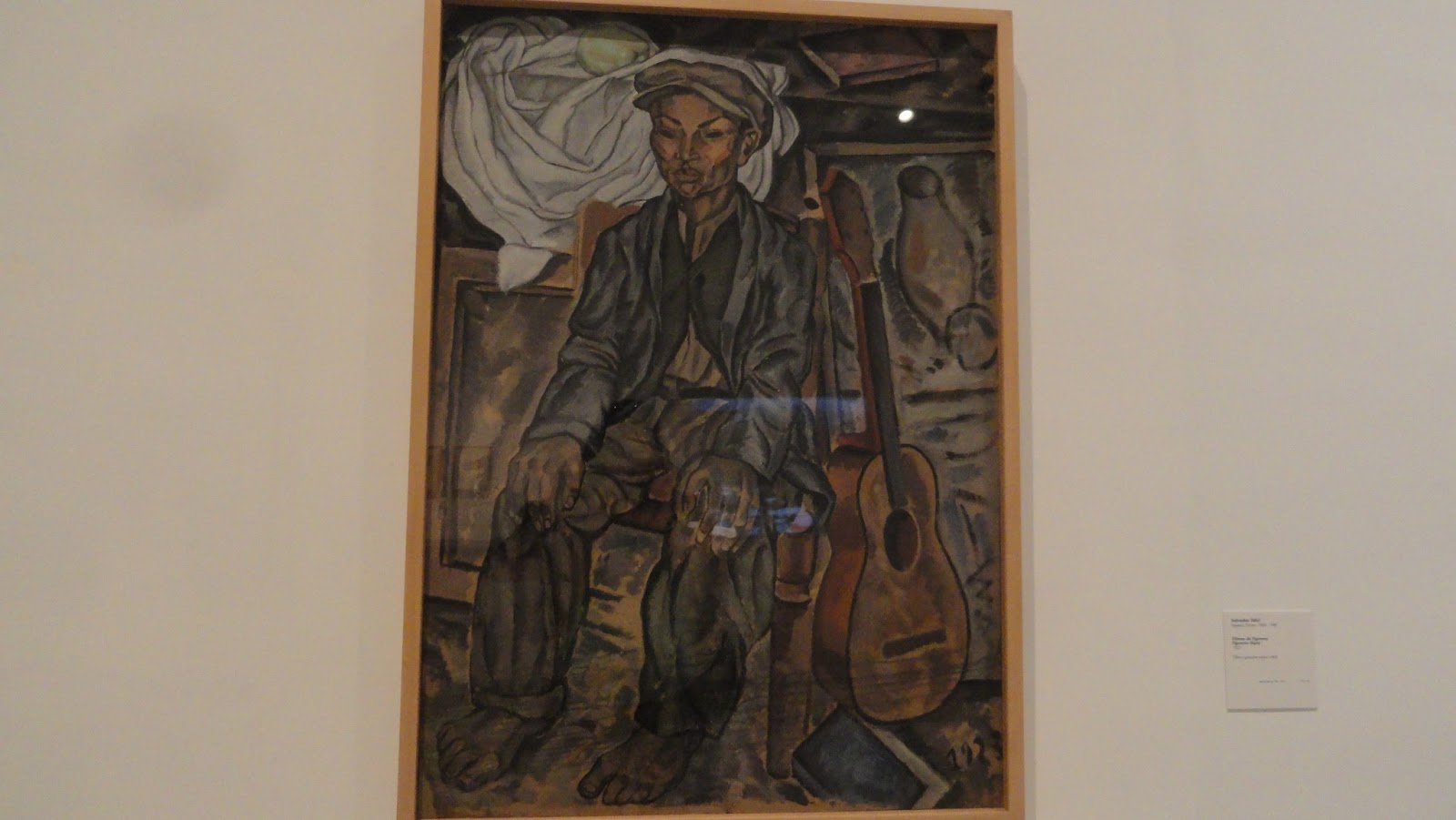
Here are just a few of the famous artists we saw in El Museo Reina Sofia:
| Picasso |
| Dalí |
| Diego Rivera |
Once we were all done with comida, we had free time until we met back at the hotel to gather our bags and head to the bus station. Some of us spent the rest of the afternoon shopping in Puerta del Sol, while some of us went back to el Parque del Retiro (Retiro Park) to relax and enjoy the beautiful weather. No matter what we were doing, being in small groups in Madrid forced us to use our Spanish at all times - from asking how much a shirt cost, to asking what kind of ice cream was available, to travelling around the subway by ourselves. We are all learning so much being completely surrounded by Spanish!
Before we knew it, it was time to gather our things, head to the bus station and back to Segovia! I think I can speak for the whole group when I say we loved experiencing Madrid!
Thursday, May 9, 2013
The Cathedral
Today we visited the cathedral that is in the heart of Segovia, at the Plaza Mayor. The cathedral is of the gothic architecture style, so it is very ornate and has a lot of arches. This was not the original cathedral of Segovia, however. The original cathedral was closer to the outskirts of town, near the castle Alcazar. This cathedral was ruined in the civil war, so another was built and per the bishops request, it was built in a different location.
The Cathedral is massive: 105 yards long, 50 yards wide, and 33 yards tall. Imagine those dimensions, like a football field! It took over 200 years to construct because of lack of funds and difficulty to build. They had to construct it all by hand with these little tools which gripped the large stones by two little holes on each side of the stone:
Besides the main section that contains the alter and some pews, there are 17 capillas. Families were able to purchase a capilla, which is like a little chapel to hold the tombs of their family members. This created a private space for the family to be buried together and space for the family to visit and pray. These tombs are in the floor of the capilla. Also each of these capillas has specific art that tells a story from the bible.
The Cathedral is massive: 105 yards long, 50 yards wide, and 33 yards tall. Imagine those dimensions, like a football field! It took over 200 years to construct because of lack of funds and difficulty to build. They had to construct it all by hand with these little tools which gripped the large stones by two little holes on each side of the stone:
![]() |
| This is a magnificent alter that holds the urn with San Fruto's ashes. |
![]() |
| The entrance to the castle. The little man statue on top is the patron saint of Segovia: San Fruto |
Besides the main section that contains the alter and some pews, there are 17 capillas. Families were able to purchase a capilla, which is like a little chapel to hold the tombs of their family members. This created a private space for the family to be buried together and space for the family to visit and pray. These tombs are in the floor of the capilla. Also each of these capillas has specific art that tells a story from the bible.
![]() |
| This is an example of a capilla. A tomb and ornate art and statues. |
| Some of the tombs are in the floor and labeled like this! |
Day 2: First Day of Class & a Visit to Our Castle!
Thursday, May 2nd started our first day of class at El Centro de Estudios Hipánicos de Segovia. Class was filled with basic information to familiarize ourselves with Spain so we can learn the most possible over the course of our three weeks here. We learned about the geography of Spain, how the country is divided into autonomous communities and provinces, with one city per province, along other towns. We also had an overview on the politics in Spain, all of which will make learning about the history of Spain easier as we continue.
After comida (lunch) with our host families, we all met in the Plaza Mayor to go visit the Alcázar, the castle here in Segovia that inspired Walt Disney! The Alcázar is absolutely breathtaking and is filled with history! After being awed by it's beauty on the outside, we headed inside for a tour. Our professor here in Segovia, Ricardo, told us everything we could possibly want to know about this castle and it's vital role in the history of Spain.
El Alcázar has been occupied by various groups throughout its history, originally being a Roman fort before it served as an Arab fort until Spain was taken back by the Christians. Each time the Alcázar changed hands, it was built up and added to, eventually making it the masterpiece that it is today. The Alázar was the first castle of the Castilian Monarchy - makes it sound very important to me! The main central tower (the largest tower in the picture above - which we climbed!) of the Alcázar served as the royal prison at one point in its history.
Enrique IV is considered the most "Segovian" king, as he spent the most amount of time during his reign here at the Alcázar. In 1474 when the news of King Henry IV's death in Madrid reached Segovia, his sister Isabella took refuge within the Alcázar and planned with her supporters to declare herself Queen. Sure enough, the very next day, Isabella became Queen Isabella I right here in Segovia!
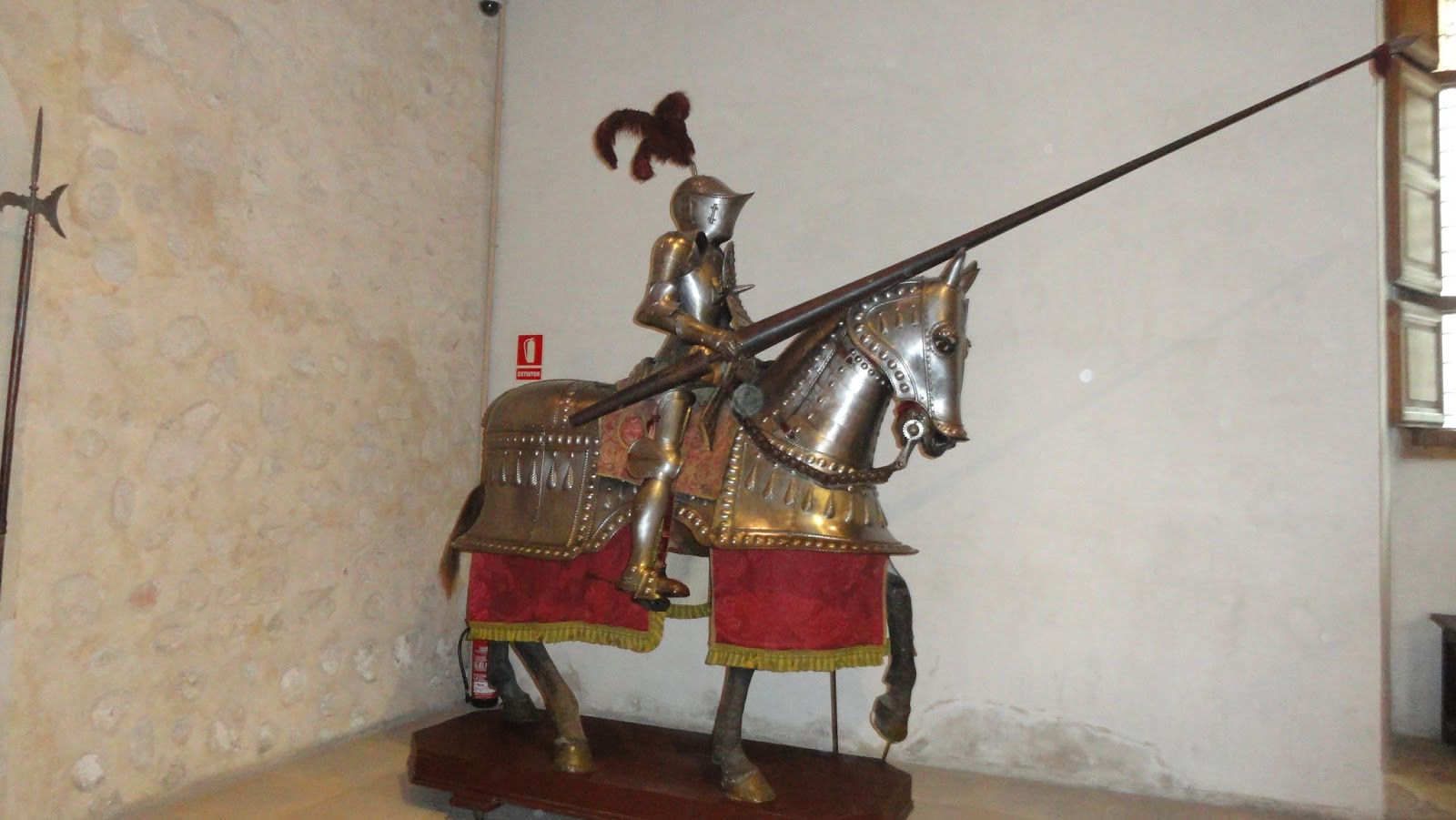
Another important piece of Spain's history can be found here in Segovia's Alcázar - Spain was united for the first time here in Segovia with the marriage of Isabella I of Castile and Ferdinand II of Aragon, later Ferdinand V of Spain. While we are still trying to get the hang of all of these kings and queens that make up Spain's history, it was awe-inspiring to see the room in the Alcázar where many of the monarchs are lined around the walls in order of when they ruled, knowing that Segovia played a huge role in that history!
During the Castilian War, Juan Bravo led the rebel Comuneros against the monarchy. One of the battles of this war took place here at Segovia's Alcázar. Juan Bravo and his men were stationed in the tower of the cathedral at the foot of the Alcázar, with the Monarchy's forces at the top of the main tower of the Alcázar. The Monarchy won this battle and the cathedral was almost entirely destroyed. After some time, the people asked the King if they could rebuild the cathedral so they could have a place to worship. The King allowed it, under the conditions that the cathedral was built elsewhere within Segovia so that this battle between towers could never happen again.
One more interesting fact about the Alcázar? It is said that Fernando II and Isabella I, los Reyes Católicos (the Catholic Monarchs) gave the money to Christopher Columbus for his voyages right here in this very castle! It's as if we have the beginning of American history right here with us in Spain!
It is incredible to think of all of the history that has taken place in this very spot, and we are fortunate enough to have it right in our backyard for three weeks!!
| El Centro de Estudios Hipánicos de Segovia |
After comida (lunch) with our host families, we all met in the Plaza Mayor to go visit the Alcázar, the castle here in Segovia that inspired Walt Disney! The Alcázar is absolutely breathtaking and is filled with history! After being awed by it's beauty on the outside, we headed inside for a tour. Our professor here in Segovia, Ricardo, told us everything we could possibly want to know about this castle and it's vital role in the history of Spain.
| El Alcázar! It is so big it is hard to capture in one shot! |
| The view of our beautiful Segovia from the top of the Alcázar. |
| Mural of the coronation of Queen Isabella I , right here in Segovia |
During the Castilian War, Juan Bravo led the rebel Comuneros against the monarchy. One of the battles of this war took place here at Segovia's Alcázar. Juan Bravo and his men were stationed in the tower of the cathedral at the foot of the Alcázar, with the Monarchy's forces at the top of the main tower of the Alcázar. The Monarchy won this battle and the cathedral was almost entirely destroyed. After some time, the people asked the King if they could rebuild the cathedral so they could have a place to worship. The King allowed it, under the conditions that the cathedral was built elsewhere within Segovia so that this battle between towers could never happen again.
| The Throne Room |
One more interesting fact about the Alcázar? It is said that Fernando II and Isabella I, los Reyes Católicos (the Catholic Monarchs) gave the money to Christopher Columbus for his voyages right here in this very castle! It's as if we have the beginning of American history right here with us in Spain!
It is incredible to think of all of the history that has taken place in this very spot, and we are fortunate enough to have it right in our backyard for three weeks!!
Subscribe to:
Posts (Atom)